


Biologia plantarum 70:109-118, 2026 | DOI: 10.32615/bp.2026.013
Study on Agrobacterium-mediated transient expression in Viola plants
- Duli WANG
 ORCID...1, Yuting CAI ORCID...1, Jindi LI ORCID...1, Ting JI ORCID...1, Jie ZHANG ORCID...1, Yi RU ORCID...2, Yuanyuan ZENG ORCID...1, Hanqing FENG ORCID...1, *, Qiaoxia LI ORCID...1, *
 - 1 College of Life Science, Northwest Normal University, 730070 Lanzhou, P.R. China
- 2 Lanzhou Veterinary Research Institute, Chinese Academy of Agricultural Science, 730046 Lanzhou, P.R. China
Background: The Viola plants have important value for theoretical and applied research. Agrobacterium-mediated transient expression enables rapid target protein production in plants, yet this system remains poorly established in Viola.
Aims: To establish an efficient Agrobacterium-mediated transient expression system in Viola.
Methods: By employing two types of A. tumefaciens strains (EHA105 and LBA4404) and green fluorescent protein (GFP) as a reporter, we demonstrated the transient expression in the leaves of four Viola species, including Viola philippica, V. prionantha, V. tricolor, and V. dissecta. Results: GFP transient expression peaked at 4 dpi in all four Viola species. Agrobacterium at OD600 = 0.3 yielded optimal expression, and strain EHA105 was superior to LBA4404; V. philippica showed the highest GFP accumulation. In the optimal system, exogenous indole-3-acetic acid (IAA) improves GFP transient expression with maximum promotion at 50 ng/mL, while methyl jasmonate (MeJA) has no facilitating effect. This system enables transient expression of FMDV VP1, whose expression is also markedly increased by 50 ng/mL IAA.
Conclusions: This study successfully established a transient expression system for Viola and identified factors affecting Agrobacterium-mediated transient expression efficiency in this genus.
Keywords: Agrobacterium-mediated transient expression, auxin, Viola, VP1.
Received: April 17, 2026; Revised: June 16, 2026; Accepted: June 30, 2026; Published online: July 20, 2026 Show citation
| ACS | AIP | APA | ASA | Harvard | Chicago | Chicago Notes | IEEE | ISO690 | MLA | NLM | Turabian | Vancouver |
Introduction
There are two major methods to express the desired protein in plants. The first method is to develop stable transgenic lines in which the gene coding the desired protein is inserted into the plant genome, and its expression is driven by certain promoter (Fischer et al., 1999). The second is to express the desired protein in plants through the Agrobacterium-mediated transient expression (Krenek et al., 2015). Compared to the development of stable transgenic lines, the Agrobacterium-mediated transient expression is a more rapid and simple method for high level expression of foreign protein (Kapila et al., 1997; Leuzinger et al., 2013). Thus, the Agrobacterium-mediated transient expression has become a powerful tool for studying functions of genes or proteins in plants, especially for the plants that are difficult to be transformed using stable transgenic methods. Since plants have emerged as a lower- cost and more secure platform for commercial production of recombinant pharmaceutical proteins by expressing the genes coding them, the Agrobacterium-mediated transient expression in plants has large advantages in rapidly meeting the demand for recombinant pharmaceutical proteins, such as antigen, antibody, and therapeutic proteins (Hitzeroth and van Zyl, 2016; Zhang et al., 2020).
The Viola is the largest genus in the family of Violaceae, comprising approximately 500 species and is widely distributed worldwide (Marcussen et al., 2011). The Viola plants have been broadly consumed as ornamentals, medicinal herbs, and raw materials for cosmetic products (Batiha et al., 2023). Research on the plants of Viola has made significant progress in some areas such as taxonomy, molecular mechanisms, chemical composition, genetic diversity, and ecological applications (Li et al., 2016; 2021a; 2024; 2025a; 2025b; Lu et al., 2022; Marcussen et al., 2022;Batiha et al., 2023; Fernández-Bobey et al., 2023; Feng et al., 2026). In addition, in applied research on bioreactors, a mature suspension cell culture system has been established for Viola odorata. By optimizing culture protocols and the fluid structure of bioreactors, this system can efficiently accumulate secondary metabolites with anti-malarial and anti-tumor activities, demonstrating promising potential for biomanufacturing applications (Babu and Srivastava, 2024; Babu et al., 2025; Manickavasagam et al., 2025). However, it is still difficult to express the foreign genes in the Viola plants by stable transgenic methods. Thus, an attempt to transiently express the foreign gene in Viola is expected, since it would be helpful for the studies of gene function, and as the new and alternative plant bioreactor to produce recombinant pharmaceutical proteins.
Therefore, by using green fluorescent protein (GFP) as the reporter, this study employed two A. tumefaciens strains (EHA105 and LBA4404) to express the GFP in the leaves of four Viola species (including V. philippica, V. prionantha, V. tricolor, and V. dissecta) via the Agrobacterium-mediated transient expression. We analyzed the optimum collocation of Viola species, types and concentrations of A. tumefaciens strain, and incubation time post-infiltration for high efficiency of transient expression in these four Viola species. We also used the IAA (indole-3-acetic acid) to further enhance the transient expression efficiency of GFP by exogenous application on the leaves of V. philippica. Furthermore, we attempted to study the transient expression of VP1 (a major capsid protein of foot-and-mouth disease virus as the antigen) in the leaves of V. philippica. Through the above research, the application value of Viola plants can be broadened for plant bioreactor to produce recombinant pharmaceutical proteins.
Materials and methods
Cultivation of plant materials: The seeds of V. philippica, V. prionantha, V. dissecta and V. tricolor were harvested from campus of Northwest Normal University, Lanzhou, Gansu, China. After natural air drying, full grained seeds were selected and sowed in the pots containing nutrient soil and vermiculite (3:1 by volume ratio). The seedlings were grown under 16 h light/8 h dark cycle at the light intensity of 120 μmol m–2 s–1 at 28°C with a humidity of 48%. When the seedlings had developed 3 - 4 true leaves, the seedlings were transplanted to provide more sufficient space for further growth for 5 weeks.
Preparation of Agrobacterium suspension: A geminiviral-based plant expression vector named pBYR2eAK2Mc, which was developed from Bean yellow dwarf virus (genus Mastrevirus, family Geminiviridae) (BeYDV) (Chen et al., 2011), was kindly provided by Prof. Mason (Arizona State University, Tempe, Arizona, USA). The gene encoding the green fluorescent protein (GFP) was cloned downstream of the Cauliflower mosaic virus 35S (CaMV 35S) promoter in this vector. The resulting constructs were then introduced into A. tumefaciens strains EHA105 and LBA4404 via heat shock, followed by screening and subculture based on the vector's antibiotic resistance gene.
A monoclonal colony of the transformed A. tumefaciens strain was grown, picked and cultured into YEB liquid medium with corresponding antibiotics as described in our previous study (Li et al., 2021b). The bacterial pellets were harvested by centrifugation at 4 472 × g for 10 min, followed by washing twice with infiltration buffer (10 mM MES-KOH, pH 5.5; 10 mM MgSO4, 100 μM acetosyringone). Afterwards, the bacterial precipitate was resuspended in the same infiltration buffer. The bacterial suspension concentration was quantified by measuring the optical density at 600 nm (OD600), and diluted to OD600 values of 0.1, 0.3, 0.5, 0.7, and 0.9 for subsequent infiltration assays.
Syringe infiltration of leaves: A small gap was gently stabbed with a needle in the lower epidermis of the leaves. The bacterial suspensions were then infiltrated into the leaves using a syringe without a needle through the gap (Chen et al., 2013; Li et al., 2021b), and the infiltrated plants were cultured under the conditions indicated above.
Photography of GFP fluorescence and GFP content detection: GFP relative fluorescence present in the infiltrated leaves was detected and photographed by fluorescence stereomicroscope (Leica M205 FA, Wetzlar, Germany) with excitation wavelength of 450 - 490 nm and emission wavelength of 500 - 550 nm.
Quantitative detection of GFP content was performed according to the method of Chen et al. (2003). The leaf samples were fully homogenized with 1:5 (w/v) pre-cooled extraction buffer (30 mM Tris-HCl, 10 mM EDTA, 10 mM NaCl, 5 mM DTT, pH 8). The homogenate was centrifuged at 15 000 × g for 15 min at 4°C, and green fluorescence of the supernatant was determined at an excitation wavelength of 485 nm and emission wavelength of 510 nm. Leaves infiltrated with A. tumefaciens carrying empty vector without the GFP gene were measured in parallel, and the resulting fluorescence was used as background value to be deducted from sample values.
Exogenous treatment of leaves with IAA and MeJA: Different concentrations of IAA (5, 10, 50, 100, 500 ng/mL) and MeJA (50, 100, 500, 1 000, 5 000 ng/mL) were prepared using distilled deionized water. Before the infiltration with A. tumefaciens, the leaves of the V. philippica were treated 4 times with different concentrations of IAA or MeJA via foliar spraying every three days. Each spray application was performed until the leaf was wet and the solution ran off. In the control group, the leaves of the seedlings were sprayed with the same amount of distilled deionized water at the same time and under the same conditions.
Determination of biomass: An analytical balance was used to measure the fresh weight of the aerial part of the seedlings. After then, the aerial part of seedlings was put in an oven at 100℃ for 20 min, dried to constant weight at 70℃, and then taken out for weighing the dry weight. For the determination of leaf area, photos of the leaves were taken by camera, and Photoshop software was used to measure the leaf area.
Transient expression of VP1 and immunoblotting: For the transient expression of VP1, GFP coding sequence in the pBYR2eAK2Mc expression vector was replaced with a synthesized gene fragment coding VP1 protein with 6-His tag at its C-terminus. The resulting construct was subsequently transformed into A. tumefaciens strain EHA105 via heat shock for transient VP1 expression. The preparation of the Agrobacterium suspension and syringe infiltration of the leaves were performed as described above. Total soluble protein from leaves was extracted with Solarbio Plant Total Protein Extraction Kit (Solarbio, Beijing, China). After SDS-PAGE electrophoresis, separated proteins were transferred to PVDF membranes (Immobilon-P, Merck Millipore, Billerica, Massachusetts, USA). Membranes were blocked with 5% (w/v) non-fat dry milk in Tris-Buffered Saline with Tween-20 (TBST) at room temperature for 2 h. After blocking, the membranes were probed with His-Tag Monoclonal Antibody (Proteintech, Rosemont, Illinois, USA), followed by Goat Anti-Mouse IgG (H+L) conjugated with Horseradish Peroxidase (HRP) (Affinity Biosciences, Cincinnati, Ohio, USA) as the secondary antibodies. Plant actin was used as the internal reference protein. Target protein bands were developed with Enhanced Chemiluminescence (ECL) substrate (Merck Millipore, Billerica, Massachusetts, USA), and band signals were detected and photographed using a ChemiDoc XRS+ imaging system (Bio-Rad, Hercules, California, USA).
Data analysis: Each experiment was performed with three independent replicates. The data were subjected to one-way analysis of variance (ANOVA) using IBM SPSS Statistics 20 software, with a significant difference indicated by P < 0.05. Graphs were generated using Excel 2016 and Origin 2024.
Results
The changes of transient expression level of GFP in the leaves of four Viola species following the incubation time post-infiltration: We firstly studied the changes of transient expression level of GFP in the leaves of four Viola species following the incubation time of post-infiltration. In the leaves of the V. philippica seedlings, either using EHA105 or LBA4404, the increase of days of post-infiltration (dpi) from 2 to 4 days dramatically enhanced the transient expression levels of GFP. However, the transient expression levels of GFP at 6 dpi became significantly lower than that at 4 dpi, while the transient expression levels of GFP at 6 dpi were still significantly higher than that at 2 dpi (Fig. 1).
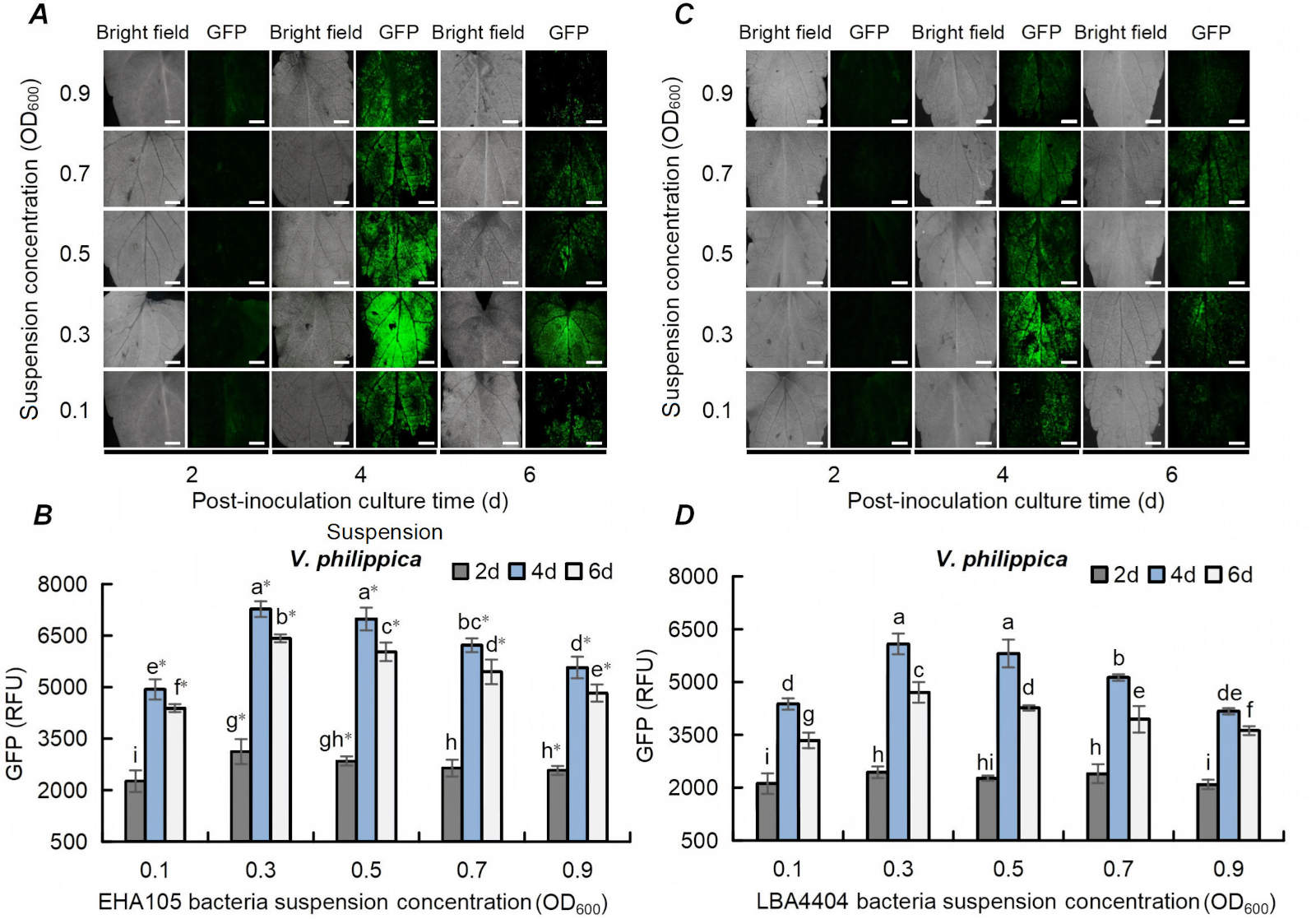
Fig. 1. Representative GFP fluorescence images and relative GFP fluorescence in the V. philippica leaves infiltrated with EHA105 (A,B) or LBA4404 (C,D) with different concentrations at different dpi. Bars = 2 mm. Data are expressed as RFU (relative fluorescence units). Means ± SD of 3 individual replications at least. Different letters indicate statistically significant differences according to Duncan's multiple range test (P < 0.05). *Indicates a significant difference between the EHA105 and LBA4404 strains under the same infection concentration and time conditions (P < 0.05, two-sample t-test).
In the leaves of V. prionantha, V. dissecta, and V. tricolor seedlings, the changes of transient expression level of GFP were similar to that observed in the leaves of V. philippica seedlings. These observations showed that the transient expression of GFP reached the peak at 4 dpi (Figs. 2, 3, 4).
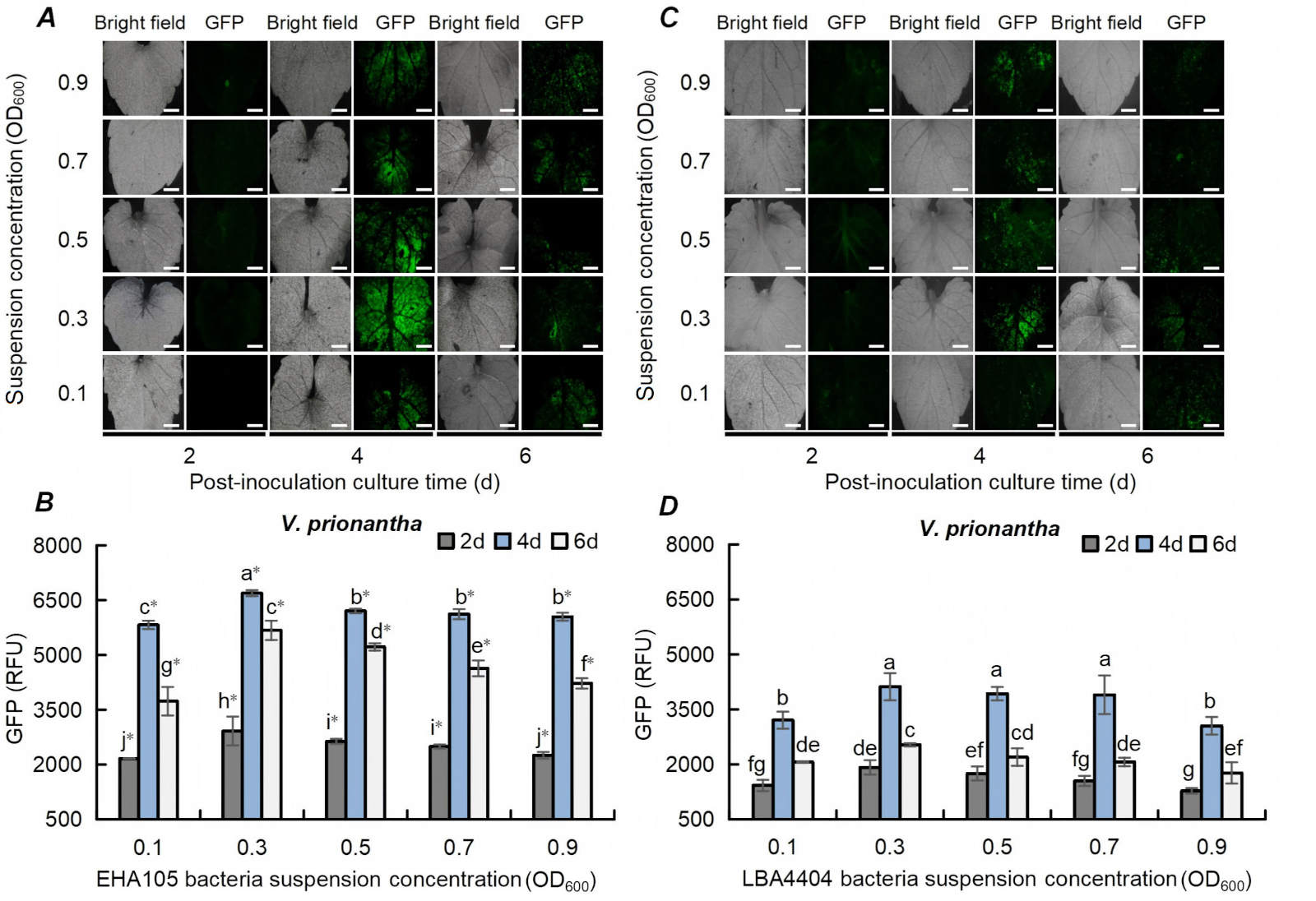
Fig. 2. Representative GFP fluorescence images and relative GFP fluorescence in the V. prionantha leaves infiltrated with EHA105 (A,B) or LBA4404 (C,D) with different concentrations at different dpi. Bars = 2mm. Data are expressed as RFU (relative fluorescence units). Means ± SD of 3 individual replications at least. Different letters indicate statistically significant differences according to Duncan's multiple range test (P < 0.05). *Indicates a significant difference between the EHA105 and LBA4404 strains under the same infection concentration and time conditions (P < 0.05, two-sample t-test).
The effect of different concentrations of A. tumefaciens on transient expression levels of GFP in the leaves of four Viola species: During the Agrobacterium-mediated transformation, the concentration of A. tumefaciens is a critical factor influencing the levels of the transient expression (Kapila et al., 1997). Therefore, we evaluated the effects of different concentrations of A. tumefaciens on transient expression of GFP. In the EHA105-infiltrated leaves of the V. philippica seedlings at any time point of dpi (2, 4, or 6 dpi), the increase of concentration of A. tumefaciens from 0.1 to 0.3 (OD600) significantly increased the transient expression level of GFP, while the expression level of GFP presented a decrease with further increase of the A. tumefaciens concentrations from 0.3 to 0.9. A similar phenomenon was observed in the LBA4404-infiltrated leaves of the V. philippica seedlings at any time point of dpi (Fig. 1).
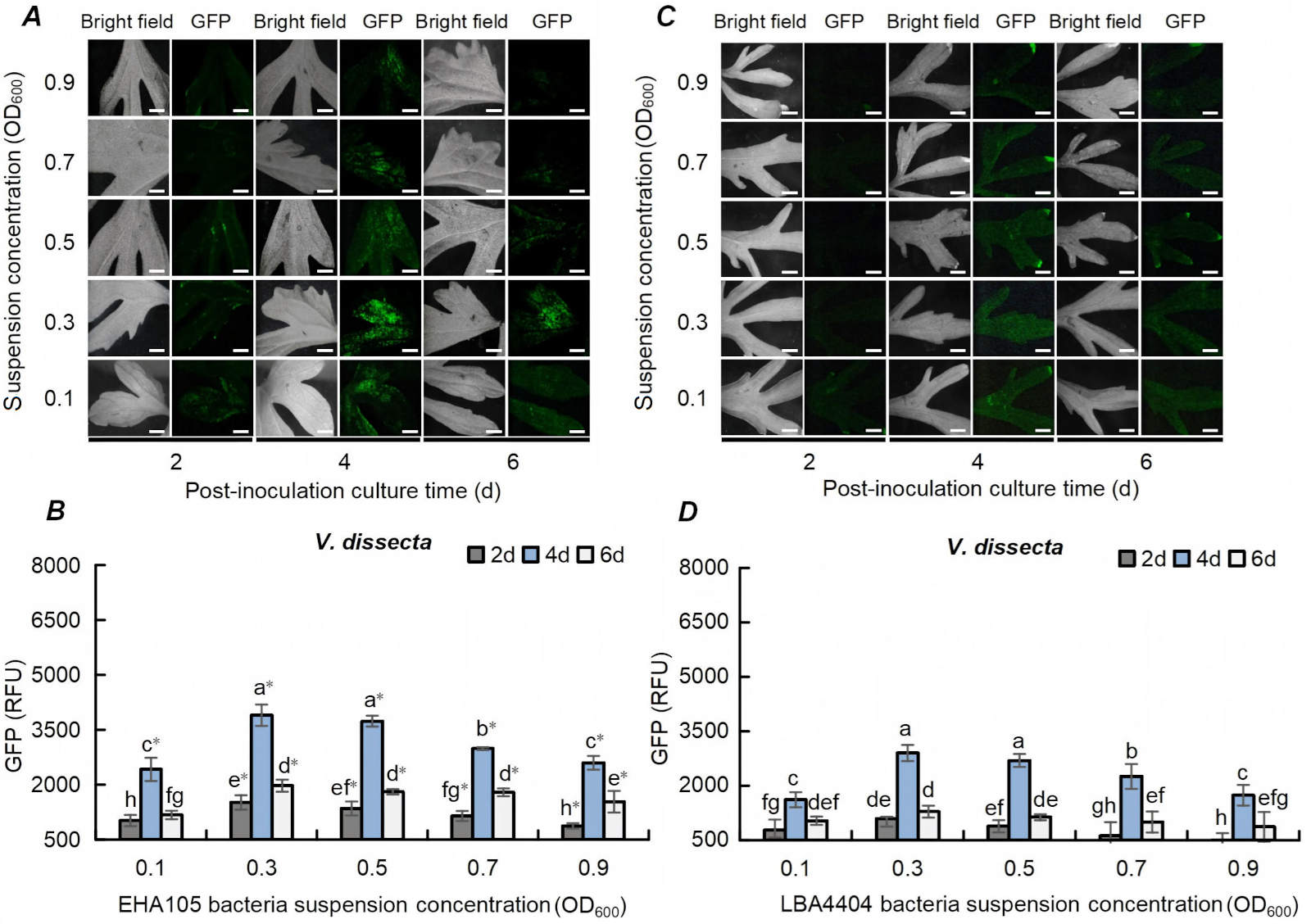
Fig. 3. Representative GFP fluorescence images and relative GFP fluorescence in the V. dissecta leaves infiltrated with EHA105 (A,B) or LBA4404 (C,D) with different concentrations at different dpi. Bars = 2 mm. Data are expressed as RFU (relative fluorescence units). Means ± SD of 3 individual replications at least. Different letters indicate statistically significant differences according to Duncan's multiple range test (P < 0.05). *Indicates a significant difference between the EHA105 and LBA4404 strains under the same infection concentration and time conditions (P < 0.05, two-sample t-test).
In the leaves of V. prionantha, V. dissecta, and V. tricolor seedlings, the effects of different concentrations of either A. tumefaciens EHA105 or LBA4404 on transient expression of GFP were also similar to those observed in the leaves of V. philippica seedlings. These observations showed that, although not always significantly higher than other concentrations of A. tumefaciens, the concentration of A. tumefaciens at 0.3 (OD600) numerically led to the highest level of GFP and thus is the most optimal concentration for the transient expression, regardless of the Viola species, types of A. tumefaciens strain, and incubation time post-infiltration (Figs. 2, 3, 4).
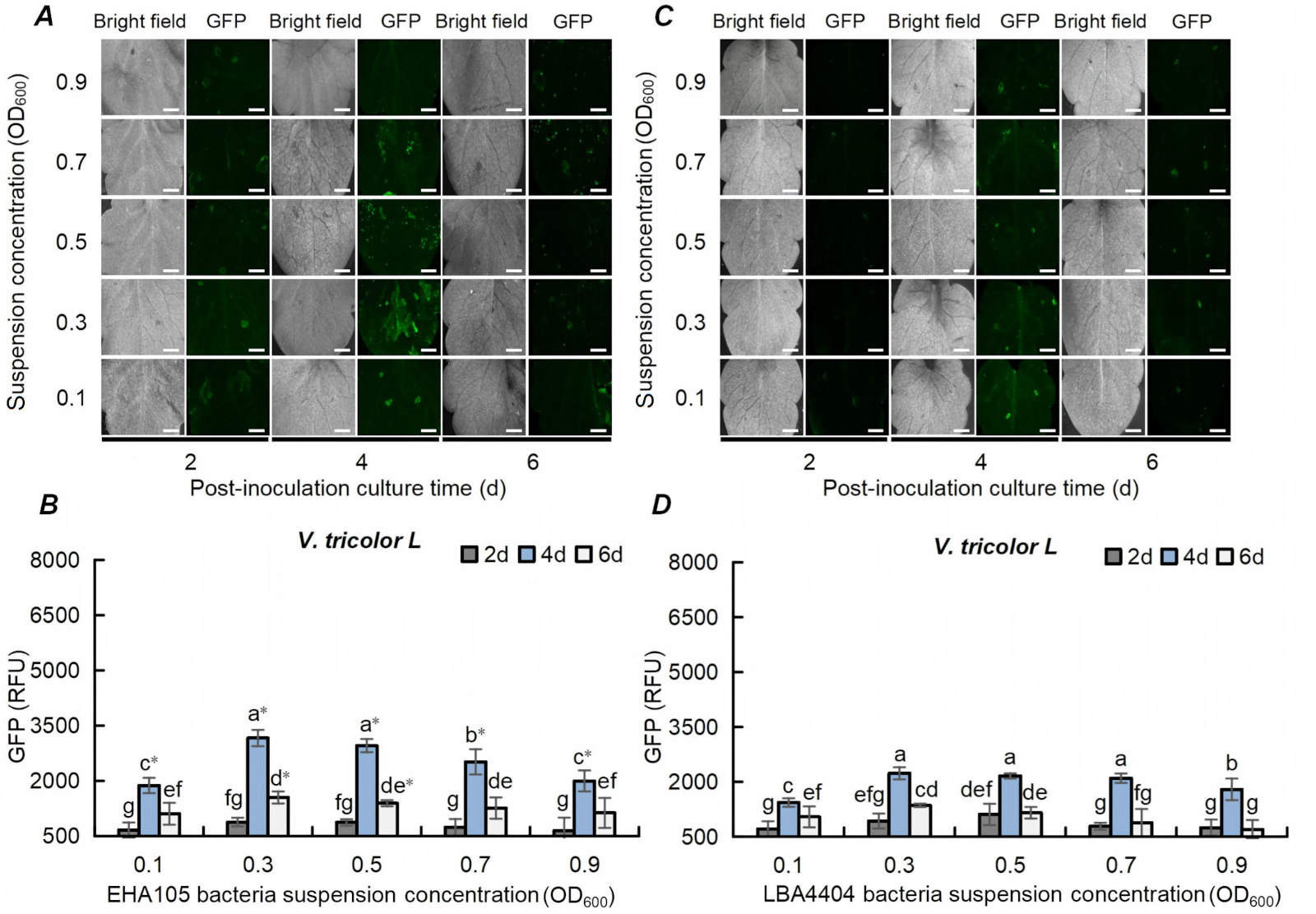
Fig. 4. Representative GFP fluorescence images and relative GFP fluorescence in the V. tricolor leaves infiltrated with EHA105 (A,B) or LBA4404 (C,D) with different concentrations at different dpi. Bars = 2 mm. Data are expressed as RFU (relative fluorescence units), Means ± SD of 3 individual replications at least. Different letters indicate statistically significant differences according to Duncan's multiple range test (P < 0.05). *Indicates a significant difference between the EHA105 and LBA4404 strains under the same infection concentration and time conditions (P < 0.05, two-sample t-test).
Infiltration with A. tumefaciens EHA105 and LBA4404 led to different levels of transient expression of GFP in the leaves of four Viola species: Previous works showed that A. tumefaciens EHA105 and LBA4404 have different ability in gene delivery into plant hosts (Barik et al., 2005; Yu et al., 2013), but which one is more compatible with Viola plants for the transient expression is still unknown. Thus, the present work also compared the difference of the transient expression efficiency of GFP when using two types of A. tumefaciens strains, EHA105 or LBA4404. In the leaves of any of these four Viola species, the expression level of GFP in the EHA105-infiltrated leaves was higher than that in the LBA4404-infiltrated leaves under the same conditions (at the same dpi and the same concentration of A. tumefaciens), indicating that strain EHA105 is more efficient than the strain LBA4404 for the transient expression of GFP in the leaves of these four Viola species (Figs. 1, 2, 3, 4).
The difference of transient expression levels of GFP in the leaves of four Viola species: We also compared the expression levels of GFP in the leaves among the V. philippica, V. prionantha, V. dissecta, and V. tricolor seedlings. In general, under the same conditions (at the same dpi and the same concentration of A. tumefaciens with the same type of strain), the V. philippica leaves displayed the highest level of the transient expression of GFP, followed successively by the V. prionantha leaves and V. dissecta leaves. The V. tricolor leaves presented the lowest level of the transient expression of GFP among the leaves of four Viola species (Figs. 1, 2, 3, 4).
Effect of exogenous IAA and MeJA on transient expression level of GFP in the V. philippica leaves: Many studies in the last decades have developed some molecular biological strategy to further enhance the transient expression levels in plants, such as the mutation of genes of host plants that could negatively impact the transient expression (Matsuo and Atsumi, 2019), and co-expression of silencing suppressors including HC-Pro and P3. Compared with laborious host gene mutation, the latter strategy is easy to operate and greatly reduces experimental labor and time costs (Anandalakshmi et al., 1998; Ma et al., 2009). However, these methods are time-consuming and labor-intensive. Interestingly, previous works have reported that exogenous application of IAA and MeJA by simple spraying can effectively enhance the level of the transient expression in the leaves of Nicotiana benthamiana (Sindarovska et al., 2012; Robert et al., 2015). Since the V. philippica exhibited the highest transient expression efficiency of GFP among the four Viola species, the leaves of the V. philippica seedlings were chosen to investigate whether exogenous IAA and MeJA can further enhance the transient expression level in the V. philippica leaves, especially under the most optimal conditions (using strain EHA105 at the concentration of 0.3 and at 4 dpi). We treated V. philippica seedlings with a series of IAA (from 5 to 500 ng/mL) and MeJA (from 50 to 5 000 ng/mL) concentrations. Seedling biomass increased at low hormone concentrations but decreased as concentrations rose further (Fig. 1 Suppl.).
By evaluating the effect of IAA at different concentrations on the transient expression levels of GFP of the leaves of the V. philippica seedlings under the optimal condition described above, it was demonstrated that treatments with IAA at concentrations from 5 to 100 ng/mL significantly enhanced the expression levels of GFP of V. philippica seedlings. Among these concentrations, IAA at 50 ng/mL made the expression levels of GFP reach the maximum (Fig. 5A,B).

Fig. 5. Effects of IAA and MeJA on GFP fluorescence intensity in V. philippica (using strain EHA105 at the concentration of 0.3 (OD600) and at 4 dpi). (A,B) Changes in GFP fluorescence intensity in seedling leaves treated with varying concentrations of IAA. (C,D) Changes in GFP fluorescence intensity in seedling leaves treated with varying concentrations of MeJA. Bars = 2 mm. Mock represents the untreated control group. Data are expressed as RFU (relative fluorescence units), means ± SD of 3 individual replications at least. Different letters indicate statistically significant differences according to Duncan's multiple range test (P < 0.05).
Compared to the controls, MeJA treatments at concentrations from 50 to 100 ng/mL did not significantly affect the transient expression levels of GFP. Treatment with MeJA at the concentrations from 500 to 5 000 ng/mL significantly decreased the GFP transient expression levels at a dose-dependent manner (Fig. 5C,D). These findings showed that exogenous application of IAA can further enhance transient expression efficiency of GFP, especially under the optimum collocation of Viola species, type and concentration of A. tumefaciens strain, and incubation time post-infiltration.
Successful transient expression of VP1 was achieved in V. philippica leaves, and this expression level was further enhanced via exogenous IAA treatment: As introduced above, an important application of transient expression in plants is to produce plant-based antigen proteins for candidate subunit vaccines (Akher et al., 2025). As presented by the results above, the highest transient expression efficiency of GFP was achieved in the V. philippica leaves at 4 dpi with strain EHA105 at the concentration of 0.3 (OD600). Thus, under such an optimum collocation, we made an attempt in the V. philippica leaves to transiently express the gene of VP1 (a major capsid protein of foot-and-mouth disease virus, genus Aphthovirus, abbreviated FMDV) (Carrillo et al., 1998) as an example of plant-based antigen. The results showed that the VP1 expression was detectable in the V. philippica leaves at the optimum collocation described above (Fig. 6). And, since IAA was an effective substance for the further enhancement of the expression level of GFP, especially at a concentration of 50 ng/mL, we also evaluated whether IAA at such concentration can also further enhance the level of VP1 expression. As expected, IAA at 50 ng/mL further enhanced the expression level of VP1 in the V. philippica leaves (Fig. 6).
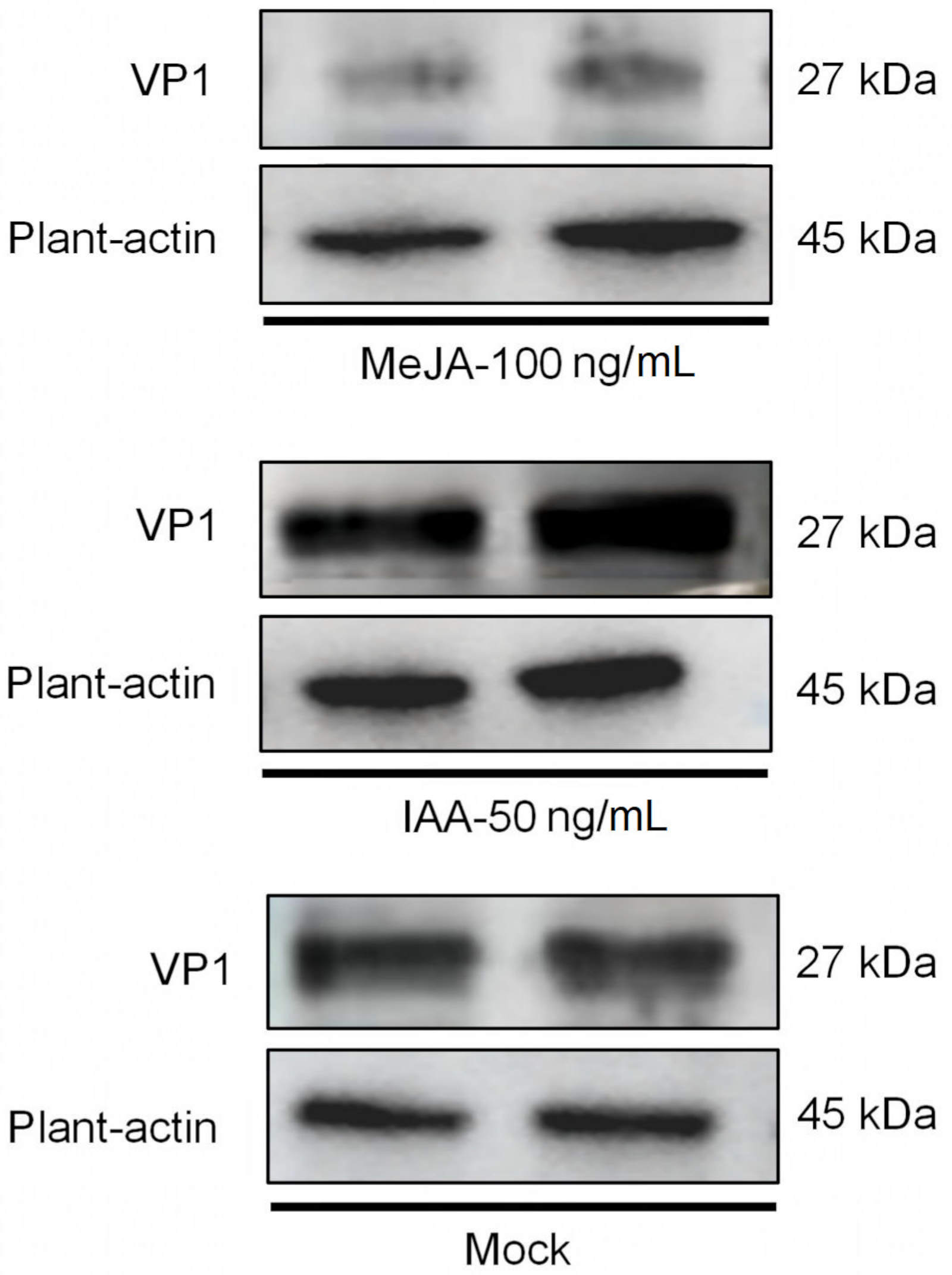
Fig. 6. Transient expression of VP1 in the V. philippica leaves (using strain EHA105 at the concentration of 0.3 (OD600) at 4 dpi) treated with mock, 50 ng/mL IAA or 100 ng/mL MeJA. The left and right panels are two independent biological replications. Mock represents the untreated control group.
Discussion
Compared to the stable genetic transformation, transient expression enables more rapid expression of the target proteins in plants, which can be achieved within about 1 - 2 weeks after agroinfiltration (Chen et al., 2013;Leuzinger et al., 2013), but the time course for the transient expression of the target proteins differs due to the differences in types of vectors or other factors. For example, by using N. benthamiana (a model plant widely used for transient expression) leaves and the cowpea mosaic virus (CPMV)-based vector, Loh and Wayah (2014) found that the transient expression of GFP was detectable and increased from 2 to 10 dpi, with the peak at 8 - 10 dpi. In the previous reports that used the N. benthamiana leaves and the BeYDV-based vector, the peak of the transient expression of the GFP proteins generally occurred at about 3 - 4 dpi (Yamamoto et al., 2018; Li et al., 2021b). This indicates that modification of the vector can accelerate the production of transient expression of the target proteins. In the present work by using the BeYDV-based vector, the transient expression levels of GFP in the leaves of four Viola species reached the maximum at 4 dpi, which was comparable to the time point of the maximum level of the transient expression in the leaves of N. benthamiana and some plant species, such as Citrus reticulata leaves (Li et al., 2017).
As presented by our results, the highest level of the transient expression of GFP was achieved with the concentration of A. tumefaciens at 0.3 (OD600). Further increase in the concentration of the Agrobacterium decreased the levels of the transient expression of GFP. Many studies also found that higher concentration of A. tumefaciens would decrease the efficiency of transient expression in plants (Sparkes et al., 2006; Tsuda et al., 2012; Mohammad et al., 2024), although the mechanism for this phenomenon is unclear. In fact, some studies have reported that, possibly due to the virulence of A. tumefaciens to plants, A. tumefaciens infection can exert many negative effects on plants, including disrupting the plant photosynthesis, respiration, and other metabolism, especially when A. tumefaciens has reached higher cell densities in plants (Krenek et al., 2015; Matsuda et al., 2018; Jeong et al., 2024). This could explain the phenomenon that higher concentration of A. tumefaciens would present certain negative influence on the transient expression of foreign protein, since disturbance of normal metabolism of plants would inevitably hinder the ability of plant cells to express proteins (Pitzschke, 2013; Beritza et al., 2024).
Previous studies also showed that the efficiency of transient expression is closely associated with the types of A. tumefaciens strains. For example, in Dustilophyllum, Srinivasan and Gothandam (2016) found that the LBA4404-mediated transient expression was higher than the EHA105-mediated. However, in potato and soybean leaves, the transient expression efficiency mediated by EHA105 was higher than that mediated by LBA4404 (Olhoft et al., 2003; Bhaskar et al., 2009). Our observations showed that in the leaves of four Viola species, the expression level of GFP in the EHA105-infiltrated leaves was higher than that in the LBA4404-infiltrated leaves. In addition, here was obvious difference in the transient expression efficiency among the four Viola species, even using the same type of A. tumefaciens strain. This indicates that the efficiency of transient expression in Viola plants is determined to a great extent by the type of interaction between A. tumefaciens types and Viola species. A possible explanation is that the difference in the susceptibility of different Viola species to different types of A. tumefaciens could determinate the amounts of A. tumefaciens that can successfully infect the host plants and thus affect the subsequent expression of the foreign proteins. Of course, more complex and multiple mechanisms could exist.
Regardless of how complex the underlying mechanism is, the aim of this study is to achieve a high efficiency of transient expression of foreign protein in Viola species. As introduced above, various methods have been developed to enhance the efficiency of Agrobacterium-mediated transient expression (Grosse-Holz et al., 2018; Matsuo and Atsumi, 2019). Among these methods, application of exogenous substances seems to be most convenient and easy to implement. In the present work, we employed IAA and MeJA, both of which have been reported to enhance the level of the transient expression in the leaves of N. benthamiana by spraying (Sindarovska et al., 2012; Robert et al., 2015).
The results of this study indicate that IAA at concentrations from 5 to 100 ng/mL significantly enhanced the expression levels of GFP of V. philippica leaves, and such effect was most obvious when using 50 ng/mL IAA, consistent with our previous findings in the N. benthamiana leaves (Li et al., 2021b). MeJA did not enhance transient GFP expression; moreover, higher MeJA concentrations led to reduced GFP expression levels. Previous studies in some plant-pathogen interaction revealed that elevated IAA levels or enhanced auxin signaling may suppress the host defenses against pathogens by impairing the salicylic acid (SA)-mediated host defenses or via an unknown mechanism that appears to be independent of SA (Djami-Tchatchou et al., 2020). MeJA is shown to induce resistance of plants against a wide range of pathogens (Wasternack and Hause, 2013; Min et al., 2024). Considering that A. tumefaciens is a pathogenic bacterium toward host plants and the defense responses of plants would limit the infection and growth of A. tumefaciens in the host plants (Pitzschke, 2013; Nabi et al., 2024), we assume that the enhancement of the transient expression efficiency in the V. philippica leaves by IAA is due to that IAA could suppress the defense responses of the leaves, while the decrease of the transient expression efficiency by MeJA is due to that MeJA enhances the defense responses of the leaves.
As introduced above, an important scenario of the application of the transient expression in plants is to produce antigen for the plant-based vaccines. From this perspective, Viola plants have some advantages, since they can be used as food and animal feed and did not contain nicotine, which commonly exists in N. benthamiana leaves (Mathew and Thomas, 2023; Zeng et al., 2025). Based on the results achieved with GFP, VP1 protein was transiently expressed under the optimal condition (in the V. philippica leaves at 4 dpi with strain EHA105 at the concentration of OD600 = 0.3). And exogenous IAA at 50 ng/mL further improved the level of VP1 expression in the leaves of V. philippica.
We believe that this work provides a valuable reference for the studies using the Agrobacterium-mediated transient expression in Viola plants, and this research can broaden the application value of Viola plants for plant bioreactor to produce recombinant pharmaceutical proteins.
Download citation

Supplementary files
| Download file | 7345_Wang_Suppl.pdf File size: 191.12 kB |
References
- Akher, S.A., Wang, K.Y., Hall, K., Hunpatin, O.S., Shan, M., Zhang, Z. & Guo, Y. (2025) Harnessing transient expression systems with plant viral vectors for the production of biopharmaceuticals in Nicotiana benthamiana. International Journal of Molecular Sciences, 26, 5510.
 Go to original source...
 - Anandalakshmi, R., Pruss, G.J., Ge, X., Marathe, R., Mallory, A.C., Smith, T.H. & Vance, V.B. (1998) A viral suppressor of gene silencing in plants. Proceedings of the National Academy of Sciences of the United States of America, 95, 13079-13084. Go to original source...
- Babu, R. & Srivastava, S. (2024) A rationally optimised batch bioreactor cultivation of Viola odorata plant cells for sustainable production of its key bioactive principles. Plant Cell, Tissue and Organ Culture, 158, 35. Go to original source...
- Babu, R., Veeramani, M., Wallepure, A., Muthuvijayan, V., Singh, S. & Srivastava, S. (2025) Model-based fed-batch cultivation of Viola odorata plant cells exhibiting antimalarial and anticancer activity. Frontiers in Bioengineering and Biotechnology, 13, 1528570. Go to original source...
- Barik, D.P., Mohapatra, U. & Chand, P.K. (2005) Transgenic grasspea (Lathyrus sativus L.): Factors influencing Agrobacterium-mediated transformation and regeneration. Plant Cell Reports, 24, 523-531. Go to original source...
- Batiha, G.E., Lukman, H.Y., Shaheen, H.M. et al. (2023) A systematic review of phytochemistry, nutritional composition, and pharmacologic application of species of the genus Viola in noncommunicable diseases (NCDs). Evidence-Based Complementary and Alternative Medicine, 2023, 5406039. Go to original source...
- Beritza, K., Watts, E.C. & van der Hoorn, R.A.L. (2024) Improving transient protein expression in agroinfiltrated Nicotiana benthamiana. New Phytologist, 243, 846-850. Go to original source...
- Bhaskar, P.B., Venkateshwaran, M., Wu, L., Ané, J.-M. & Jiang, J. (2009) Agrobacterium-mediated transient gene expression and silencing: a rapid tool for functional gene assay in potato. PLoS ONE, 4, e5812. Go to original source...
- Carrillo, C., Wigdorovitz, A., Oliveros, J.C. et al. (1998) Protective immune response to foot-and-mouth disease virus with VP1 expressed in transgenic plants. Journal of Virology, 72, 1688-1690. Go to original source...
- Chen, N., Hsiang, T. & Goodwin, P.H. (2003) Use of green fluorescent protein to quantify the growth of Colletotrichum during infection of tobacco. Journal of Microbiological Methods, 53, 113-122. Go to original source...
- Chen, Q., He, J., Phoolcharoen, W. & Mason, H.S. (2011) Geminiviral vectors based on bean yellow dwarf virus for production of vaccine antigens and monoclonal antibodies in plants. Human Vaccines, 7, 331-338. Go to original source...
- Chen, Q., Lai, H., Hurtado, J., Stahnke, J., Leuzinger, K. & Dent, M. (2013) Agroinfiltration as an effective and scalable strategy of gene delivery for production of pharmaceutical proteins. Advanced Techniques in Biology & Medicine, 1, 103. Go to original source...
- Djami-Tchatchou, A.T., Harrison, G.A., Harper, C.P., Wang, R., Prigge, M.J., Estelle, M. & Kunkel, B.N. (2020) Dual role of auxin in regulating plant defense and bacterial virulence gene expression during Pseudomonas syringae PtoDC3000 pathogenesis. Molecular Plant-Microbe Interactions, 33, 1059-1071. Go to original source...
- Feng, J., Li, J., Zhang, Z., Ding, J., Ma, J. & Li, Q. (2026) DELLA gene expression may be involved in chasmogamous-cleistogamous flower development and regulate the expression of B-class floral homeotic genes in Viola philippica. Plant Physiology and Biochemistry, 231, 111031. Go to original source...
- Fernández-Bobey, A., Dias, N.B., Vieira, N.C. et al. (2023) Violaceae: chemical constituents, traditional use and pharmacology. Phytochemistry Reviews, 23, 147-227. Go to original source...
- Fischer, R., Vaquero-Martin, C., Sack, M., Drossard, J., Emans, N. & Commandeur, U (1999) Towards molecular farming in the future: transient protein expression in plants. Biotechnology and Applied Biochemistry, 30, 113-116. Go to original source...
- Grosse-Holz, F., Madeira, L., Zahid, M.A. et al. (2018) Three unrelated protease inhibitors enhance accumulation of pharmaceutical recombinant proteins in Nicotiana benthamiana. Plant Biotechnology Journal, 16, 1797-1810. Go to original source...
- Hitzeroth, I.I. & van Zyl, A.R. (2016) Transient expression of viral proteins in plants using Agrobacterium tumefaciens. In: Thomas, S. (Ed.) Vaccine Design. Methods in Molecular Biology. Vol. 1404. New York: Humana, pp. 581-595. Go to original source...
- Jeong, J., Jeon, E., Hwang, M.K., Song, Y.J. & Kim, J.-Y. (2024) Development of super-infective ternary vector systems for enhancing the Agrobacterium-mediated plant transformation and genome editing efficiency. Horticulture Research, 11, uhae187. Go to original source...
- Kapila, J., De Rycke, R., Van Montagu, M. & Angenon, G. (1997) An Agrobacterium-mediated transient gene expression system for intact leaves. Plant Science, 122, 101-108. Go to original source...
- Krenek, P., Samajova, O., Luptovciak, I., Doskocilova, A., Komis, G. & Samaj, J. (2015) Transient plant transformation mediated by Agrobacterium tumefaciens: Principles, methods and applications. Biotechnology Advances, 33, 1024-1042. Go to original source...
- Leuzinger, K., Dent, M., Hurtado, J. et al. (2013) Efficient agroinfiltration of plants for high-level transient expression of recombinant proteins. Journal of Visualized Experiments, 77, e50521. Go to original source...
- Li, F., Dai, S.-M., Deng, Z.-N. et al. (2017) Evaluation of parameters affecting Agrobacterium-mediated transient expression in citrus. Journal of Integrative Agriculture, 16, 572-579. Go to original source...
- Li, Q., An, Z., Zhao, G., Chen, C., Sun, K. & He, C. (2025a) Interspecies transcriptomic comparisons reveal potential molecular genetic mechanisms underlying the evolutionary development of dimorphic flowers in Viola. Journal of Systematics and Evolution, 63, 892-909. Go to original source...
- Li, Q., Huo, Q., Wang, J., Zhao, J., Sun, K. & He, C. (2016) Expression of B-class MADS-box genes in response to variations in photoperiod is associated with chasmogamous and cleistogamous flower development in Viola philippica. BMC Blant Biology, 16, 151. Go to original source...
- Li, Q., Li, J., Zhang, L. et al. (2021a) Gibberellins are required for dimorphic flower development in Viola philippica. Plant Science, 303, 110749. Go to original source...
- Li, Q., Zhang, Z., Li, K., Zhu, Y., Sun, K. & He, C. (2024) Identification of microRNAs and their target genes associated with chasmogamous and cleistogamous flower development in Viola prionantha. Planta, 259, 116. Go to original source...
- Li, Q., Zhu, Y., Li, Y., Chen, C., Li, J., Sun, K. & He, C. (2025b) Expression variation of Viola APETALA3 orthologous genes is correlated with chasmogamous and cleistogamous flower development. BMC Plant Biology, 25, 319. Go to original source...
- Li, Y., Sun, M., Wang, X. et al. (2021b) Effects of plant growth regulators on transient expression of foreign gene in Nicotiana benthamiana L. leaves. Bioresources and Bioprocessing, 8, 124. Go to original source...
- Loh, H.-S. & Wayah, S.B. (2014) Optimizations of laboratory-scale vacuum-assisted agroinfiltration for delivery of a transgene in Nicotiana benthamiana. Asian Journal of Biotechnology, 6, 1-14. Go to original source...
- Lu, G., Qiao, J., Wang, L. et al. (2022) An integrated study of Violae Herba (Viola philippica) and five adulterants by morphology, chemical compositions and chloroplast genomes: insights into its certified plant origin. Chinese Medicine, 17, 32. Go to original source...
- Ma, P.D., Liu, J.Y., He, H.X. et al. (2009) A viral suppressor P1/HC-Pro increases the GFP gene expression in Agrobacterium-mediated transient assay. Applied Biochemistry and Biotechnology, 1587, 243-252. Go to original source...
- Manickavasagam, V.M., Anupindi, K., Bhatt, N. & Srivastava, S. (2025) Characterizing the effect of impeller design in plant cell fermentations using CFD modeling. Scientific Reports, 15, 9322. Go to original source...
- Marcussen, T., Ballard, H.E., Danihelka, J., Flores, A.R., Nicola, M.V. & Watson, J.M. (2022) A revised phylogenetic classification for Viola (Violaceae). Plants, 11, 2224. Go to original source...
- Marcussen, T., Blaxland, K., Windham, M.D., Haskins, K.E. & Armstrong, F. (2011) Establishing the phylogenetic origin, history, and age of the narrow endemic Viola guadalupensis (Violaceae). American Journal of Botany, 98, 1978-1988. Go to original source...
- Mathew, M. & Thomas, J. (2023) Tobacco-based vaccines, hopes, and concerns: A systematic review. Molecular Biotechnology, 65, 1023-1051. Go to original source...
- Matsuda, R., Ueno, A., Nakaigawa, H. & Fujiwara, K. (2018) Gas exchange rates decrease and leaf temperature increases in Nicotiana benthamiana leaves transiently overexpressing hemagglutinin in an Agrobacterium-assisted viral vector system. Frontiers in Plant Science, 9, 1315. Go to original source...
- Matsuo, K. & Atsumi, G. (2019) CRISPR/Cas9-mediated knockout of the RDR6 gene in Nicotiana benthamiana for efficient transient expression of recombinant proteins. Planta, 250, 463-473. Go to original source...
- Min, D., Li, F., Ali, M., Zhang, X. & Liu, Y. (2024) Application of methyl jasmonate to control disease of postharvest fruit and vegetables: A meta-analysis. Postharvest Biology and Technology, 208, 112667. Go to original source...
- Mohammad, T., Ghogare, R., Morton, L.B. et al. (2024) Evaluation of parameters affecting Agrobacterium-mediated transient gene expression in industrial hemp (Cannabis sativa L.). Plants, 13, 664. Go to original source...
- Nabi, Z., Manzoor, S., Nabi, S.U. et al. (2024) Pattern-triggered immunity and effector-triggered immunity: crosstalk and cooperation of PRR and NLR-mediated plant defense pathways during host-pathogen interactions. Physiology and Molecular Biology of Plants, 30, 587-604. Go to original source...
- Olhoft, P.M., Flagel, L.E., Donovan, C.M. & Somers, D.A. (2003) Efficient soybean transformation using hygromycin B selection in the cotyledonary-node method. Planta, 216, 723-735. Go to original source...
- Pitzschke, A. (2013) Agrobacterium infection and plant defense -transformation success hangs by a thread. Frontiers in Plant Science, 4, 519. Go to original source...
- Robert, S., Goulet, M.-C., D'Aoust, M.-A., Sainsbury, F. & Michaud, D. (2015) Leaf proteome rebalancing in Nicotiana benthamiana for upstream enrichment of a transiently expressed recombinant protein. Plant Biotechnology Journal, 13, 1169-1179. Go to original source...
- Sindarovska, Y.R., Gerasymenko, I.M., Kuchuk, M.V. & Sheludko, Y.V. (2012) Influence of exogenous phytohormones, methyl jasmonate and suppressors of jasmonate biosynthesis on Agrobacterium-mediated transient expression in Nicotiana excelsior. Biopolymers and Cell, 28, 368-373. Go to original source...
- Sparkes, I.A., Runions, J., Kearns, A. & Hawes, C. (2006) Rapid, transient expression of fluorescent fusion proteins in tobacco plants and generation of stably transformed plants. Nature Protocols, 1, 2019-2025. Go to original source...
- Srinivasan, R. & Gothandam, K.M. (2016) Synergistic action of D-glucose and acetosyringone on Agrobacterium strains for efficient Dunaliella transformation. PLoS ONE, 11, e0158322. Go to original source...
- Tsuda, K., Qi, Y., Nguyen, L.V. et al. (2012) An efficient Agrobacterium-mediated transient transformation of Arabidopsis. The Plant Journal, 69, 713-719. Go to original source...
- Wasternack, C. & Hause, B. (2013) Jasmonates: biosynthesis, perception, signal transduction and action in plant stress response, growth and development. An update to the 2007 review in Annals of Botany. Annals of Botany, 111, 1021-1058. Go to original source...
- Yamamoto, T., Hoshikawa, K., Ezura, K. et al. (2018) Improvement of the transient expression system for production of recombinant proteins in plants. Scientific Reports, 8, 4755. Go to original source...
- Yu, G., Liu, Y., Du, W. et al. (2013) Optimization of Agrobacterium tumefaciens-mediated immature embryo transformation system and transformation of glyphosate-resistant gene 2mG2-EPSPS in maize (Zea mays L.). Journal of Integrative Agriculture, 12, 2134-2142. Go to original source...
- Zeng, G., Li, X., Zhao, C., Pang, Y., Luo, X. & Tang, Z. (2025) Proximate composition and in vitro bioactive properties of leaf extracts from seven Viola species. Foods, 14, 302. Go to original source...
- Zhang, Y., Chen, M., Siemiatkowska, B. et al. (2020) A highly efficient Agrobacterium-mediated method for transient gene expression and functional studies in multiple plant species. Plant Communications, 1, 100028. Go to original source...